
 Roof Age
 Water Damage
 Warning Signs
 Cost Comparison
 Insurance Tips
How to Know If Your Roof Needs Repair
or Full Replacement
Most homeowners only think about their roof when they move in and when something is actively leaking. That gap in between is exactly where thousands of dollars get lost. Here’s how to tell the difference before it costs you twice as much.
A repair when you needed a replacement means you pay twice. A replacement when a repair would have done the job means you overpaid. This guide gives you the actual signals to look for, so you can walk into any contractor conversation knowing what you’re dealing with.
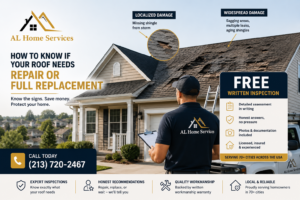
The Core Question: Is the Damage Isolated or Widespread?
Every repair-vs-replacement decision comes down to one thing: is the problem in one spot, or is it everywhere? A single damaged section after a storm? That’s a repair. Granules in your gutters, sagging decking, and three separate leak points? That’s a replacement conversation.
 Lean Toward Repair
 Lean Toward Repair
- Damage is in one localized area
- Roof is under 15 years old
- Rest of the roof is structurally sound
- Storm or impact caused specific damage
- No interior water staining
Lean Toward Replacement
 Lean Toward Replacement
- Roof is 20+ years old
- Multiple leak points or widespread damage
- Shingles curling, cracking, or missing in many areas
- Sagging or soft spots on the deck
- Repair cost exceeds 30% of replacement cost
Warning Signs
7 Signs That Tell You Which Way to Go
1Your Roof Is 20+ Years Old
Age is the single most important factor. According to the National Roofing Contractors Association (NRCA), standard asphalt shingles last 20–30 years under normal conditions. If your roof is hitting that range, a repair buys you maybe 2–3 more years — and you’ll still need a replacement on the other end.
If you don’t know your roof’s age, check your home inspection report from when you bought the house, or ask a contractor to date it from the shingle type and wear patterns.
 Roofing material lifespans: Asphalt shingles 20–30 yrs · Metal roofing 40–70 yrs · Tile 50+ yrs · Wood shake 20–25 yrs
2Granules Are Filling Your Gutters
Those dark, sand-like particles in your gutters are the protective granule coating from asphalt shingles. A few granules after installation is normal. Finding them consistently — especially after every rain — means your shingles are losing their UV protection and weatherproofing.
Heavy granule loss across the whole roof means the shingles are nearing end of life. Localized granule loss in one area (common after a hailstorm) can usually be repaired.
3Shingles Are Curling, Cracking, or Missing
Curling shingles (edges lifting up or the middle cupping downward) are a sign of moisture damage or heat warping — both indicate the material is degrading. Missing shingles from a recent storm is a repair. Missing shingles in multiple places across the roof, along with curling on the remaining ones, is a replacement conversation.
 Rule of thumb: If more than 30% of your shingles show visible damage or wear, replacement is typically more cost-effective than patching area by area.
4You See Daylight Through the Attic
Go into your attic on a bright day and look up. If you can see streaks or pinpoints of daylight coming through, your roof deck has gaps that are letting in water and air. The U.S. Department of Energy notes that attic air leaks are among the leading causes of home energy loss — and these same gaps allow moisture to rot your decking from the inside.
While you’re up there: check for dark staining, soft spots, or a spongy feel when you walk the decking. Any of those signals means the structural layer beneath your shingles has been compromised — often a full replacement indicator.
5You Have Water Stains on Your Ceilings or Walls
Brown rings or discoloration on interior ceilings mean water has breached the roof and traveled to your living space. A single stain near a chimney or pipe flashing is almost always a repair (flashing failures are common and fixable). Multiple stains in different rooms point to widespread roof failure.
Important: never ignore ceiling stains. Water that reaches your ceiling has already saturated insulation, soaked wood framing, and potentially started mold growth — all of which compound the damage and the cost. Getting a professional roofing inspection as soon as you spot staining is the right move.
6Your Roof Is Sagging
A sagging roofline is a structural emergency. This is not a repair situation. Sagging indicates that the roof deck, rafters, or both have been weakened — usually from long-term moisture damage or rot. A sagging roof is at risk of partial collapse and needs to be addressed immediately.
 If your roof is visibly sagging, call a contractor today — not next week. This is a safety issue, not just a maintenance one.
7You’ve Repaired the Same Area More Than Twice
Recurring leaks from the same spot are telling you something: the repair isn’t fixing the underlying problem, it’s just patching the symptom. At a certain point, the cost of repeated repairs exceeds what a replacement would have cost — and you’ve been living with the risk the whole time.
As a general rule: if you’ve had the same area repaired twice in five years and it’s leaking again, get a full inspection and a replacement quote before spending another dollar on patches.
Repair vs. Replacement — What It Actually Costs
2026 national averages. Final pricing depends on roof size, pitch, material, and local labor rates.
| Situation | Typical Cost | Verdict |
|---|---|---|
| Minor shingle repair (1–2 sections) | $150 – $400 | Repair ✓ |
| Flashing repair (chimney, vents, valleys) | $200 – $600 | Repair ✓ |
| Partial re-roof (one slope) | $1,000 – $3,500 | Repair / Evaluate |
| Full roof replacement (asphalt, avg. home) | $7,000 – $15,000 | Replace if warranted |
| Full replacement (metal / tile) | $15,000 – $40,000+ | Long-term investment |
Does Insurance Cover It?
Homeowners insurance typically covers roof damage caused by sudden, unexpected events — hail, wind, falling trees. It generally does not cover damage from normal wear and tear or neglect. According to the Insurance Information Institute, storm-related roof claims are among the most common homeowner claims filed each year.
Usually Covered
 Usually Covered
Storm damage (hail, wind, ice dams), damage from falling objects, fire damage, and sudden structural failure.
Usually Not Covered
 Usually Not Covered
Age-related wear, gradual deterioration, improper installation, or damage resulting from lack of maintenance. Always document damage with photos immediately after a storm — it strengthens your claim significantly.
Related Services Worth Checking While You’re At It
If you’re already having roof work done, it’s a good time to check two things that go hand in hand:


AL Home Services
Not Sure Where Your Roof Stands? Get a Free Written Inspection.
At AL Home Services, every inspection comes with a written assessment — no pressure, no vague verbal estimates. Our licensed, fully insured team tells you exactly what’s going on, whether it’s a repair, a replacement, or nothing urgent at all. We also help you understand what your insurance may cover so you’re not leaving money on the table.
Serving 70+ cities across the USA · 7+ years experience · Written workmanship warranty included
 Call (213) 720-2467
Quick Takeaway
Repair makes sense when the damage is isolated, the roof is under 15 years old, and the rest of the structure is sound. Replacement makes sense when the roof is aging, damage is widespread, or you’ve already been patching the same problems repeatedly.
When in doubt, get a written inspection from a licensed contractor — not just a verbal walk-around. A good contractor will tell you honestly which way it goes, because recommending an unnecessary replacement to someone who only needed a repair is the fastest way to lose referrals.
Check if AL Home Services serves your area and schedule a free roof inspection — no commitment required.
Looking for more home maintenance guides? Visit our blog for tips on keeping every part of your home in shape.